
Setting freelance rates is one of the biggest challenges for independent professionals. Charge too little, and you’ll burn out while barely covering bills. Charge too much without a strategy, and clients may walk away. The good news? You can set rates that feel good, attract the right clients, and build real profit—without guessing.
This guide walks you through 10 practical steps to price your services confidently and profitably in today’s market. Whether you’re just starting or ready to raise your rates, these steps will help you move from underpaid gigs to sustainable income.
Table of Contents
Step 1: Calculate Your True Cost of Doing Business
Before setting any rate, understand what it actually costs to run your freelance business. Many new freelancers forget this and price themselves into poverty.
Start with your personal living expenses. List monthly costs like rent/mortgage, groceries, utilities, transportation, insurance, phone, internet, and subscriptions. Multiply by 12 for the annual total. Add a buffer for emergencies and lifestyle goals—maybe 10-20% extra.
Next, factor in business expenses: software (Adobe, Figma, Canva Pro), hardware, website hosting, marketing tools, accounting software, taxes, and professional development. Don’t forget self-employment taxes (in the US, this is around 15.3% for Social Security and Medicare).
Example: If your total annual needs come to $85,000 (living + business + taxes), that’s your baseline. Many experts recommend adding 20-30% profit margin on top to grow your business and handle slow months.
This number becomes your “non-negotiable floor.” Anything below it means you’re losing money over time.
Step 2: Determine Your Billable Hours Realistically
A huge mistake is assuming you’ll work 40 hours a week, 52 weeks a year. In reality, freelancers spend time on admin, marketing, client communication, invoicing, learning, and unpaid breaks.
Most experienced freelancers estimate only 50-60% of their time is billable. That means out of roughly 2,000 potential working hours per year (40 hours × 50 weeks), you might only bill 1,000–1,200 hours.
Quick calculation:
- Annual income goal: $100,000
- Billable hours: 1,100
- Base hourly rate needed: ~$91/hour
Adjust this for vacations, holidays, and downtime. Building in non-billable time protects your energy and prevents burnout.
Step 3: Research Market Rates in Your Niche
Never price in a vacuum. Spend time understanding what others charge for similar work.
Search platforms like Upwork, Fiverr (for entry-level), and specialized job boards. Check industry reports, Reddit communities (r/freelance, niche-specific subs), and LinkedIn. Reach out to peers politely for insights.
Current benchmarks (2025-2026 data):
- Graphic designers: $40–$80+/hour
- Writers/Content creators: $50–$150+/hour
- Web developers: $75–$150+/hour
- Consultants: $100–$300+/hour
Rates vary wildly by experience, location, and specialization. A copywriter specializing in SaaS email sequences can charge more than a general blogger. High-demand niches like AI implementation or conversion-focused design command premiums.
Document your findings in a spreadsheet. Note low, average, and high rates to position yourself strategically.
Step 4: Choose the Right Pricing Model
Different models suit different services. Experiment and adjust over time.
- Hourly: Simple for beginners or ongoing work, but caps your income and penalizes efficiency.
- Project-based/Fixed: Better for defined scopes. Clients love predictability.
- Value-based: Charge based on the results you deliver (e.g., a sales page that generates $50k revenue). This often yields the highest earnings.
- Retainer: Monthly fee for ongoing availability—great for stability.
Many successful freelancers use a hybrid: project fees with hourly for extras. Value-based pricing rewards expertise rather than time spent.
Step 5: Factor in Your Unique Value and Experience
Your rate isn’t just about time—it’s about the transformation you provide.
Ask yourself:
- How much experience do you have?
- What results have you delivered (case studies, testimonials)?
- Do you have specialized skills, certifications, or rare knowledge?
- How quickly can you deliver high-quality work?
A junior designer might charge $50/hour, while a senior who consistently boosts client revenue charges $120+. If your work saves clients time, money, or generates revenue, you deserve to capture a fair share of that value.
Create a “value inventory” list: past wins, skills, tools, and efficiency. This builds confidence when justifying rates.
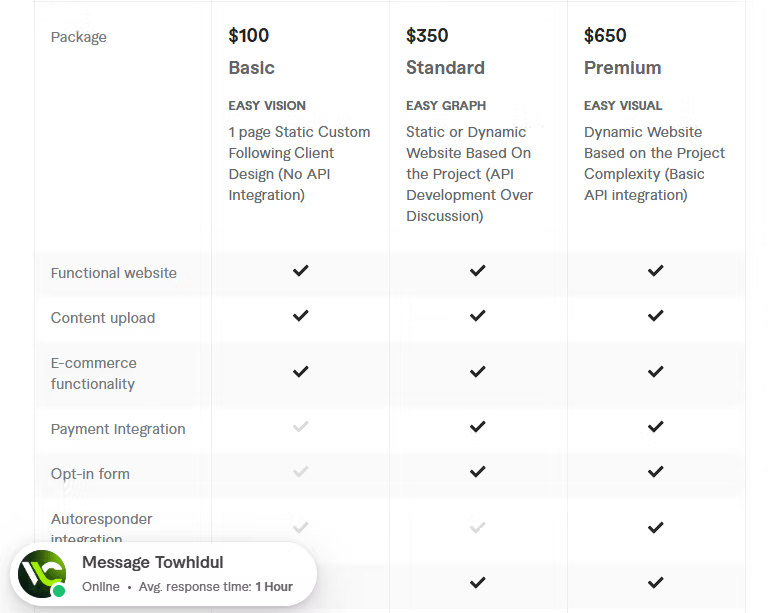
Step 6: Set Tiered Pricing Packages
Flat rates confuse clients. Tiered packages make decisions easier.
Example for a Website Designer:
- Basic: Simple 5-page site – $2,500
- Standard: 10 pages + SEO setup + revisions – $4,500
- Premium: Custom design, e-commerce, analytics, training – $8,000
Each tier clearly shows what’s included. This encourages upgrades while giving options. Use “good/better/best” framing—most clients pick the middle option.
Step 7: Build in Profit and Buffers
Profit isn’t greedy—it’s necessary for sustainability.
Add buffers for:
- Scope creep (clients often request extras)
- Payment delays
- Taxes (set aside 25-35%)
- Slow seasons
- Business growth (marketing, new tools)
Aim for 30-50% profit margin after expenses. If a project costs you $2,000 in time/expenses, charge at least $3,000–$4,000.
Review your rates every 6-12 months. Inflation, new skills, and market changes justify increases.
Step 8: Test and Validate Your Rates
Don’t wait for perfection. Start quoting your new rates on proposals.
Track:
- How many leads convert at this price?
- Client feedback on value
- Your income and satisfaction
If you win every single project, you’re probably undercharging. If you lose most, refine your positioning or target better clients. Start slightly higher than comfortable—you can always offer discounts for first projects or referrals.
Step 9: Communicate Your Rates Confidently
Pricing conversations feel awkward, but preparation helps.
- Present value first (results, process, benefits)
- Use clear proposals with scope, timelines, and terms
- Have a simple response for “Can you do it cheaper?” → “I can adjust scope to fit your budget while maintaining quality.”
- Offer payment plans or milestones for larger projects
Transparency builds trust. Clients who push only on price often become difficult later. Focus on those who value quality and results.
Step 10: Review, Raise, and Refine Regularly
Successful freelancers treat pricing as an ongoing process.
Every quarter, review:
- Income vs. goals
- Time spent per project
- Client satisfaction and results
- Market changes
Raise rates with existing clients thoughtfully—give notice and highlight added value. Many accept increases because they already trust you.
Celebrate wins. Hitting profitable rates frees you to take better projects, invest in yourself, and enjoy life outside work.
Common Pitfalls to Avoid
- Comparing yourself only to low-rate competitors
- Underestimating non-billable time
- Sticking with hourly forever
- Fear of losing clients when raising prices (good clients usually stay)
- Ignoring your niche’s value perception
Final Thoughts: You Deserve Profitable Rates
Setting freelance rates profitably combines math, self-worth, market awareness, and strategy. Start with your costs and goals, research thoroughly, choose smart models, and communicate value clearly.
The freelancers earning six figures aren’t necessarily the most talented—they’re often the ones who learned to price strategically. You can do the same.
Take action today: Calculate your baseline rate using Steps 1-2. Then research your market and test a new proposal this week.
Your time and expertise have real value. Price them accordingly, serve great clients, and build the freelance life you actually want.

Muhammad Hasan is an experienced SEO expert and blog writer passionate about helping businesses connect with top freelance talent. With 4 years of hands-on experience in content strategy and search engine optimization, he specializes in writing SEO-friendly blog posts that rank, engage, and convert.