
In today’s fast-paced digital world, having a strong online presence is non-negotiable for businesses of all sizes. Whether you’re launching a startup, redesigning an e-commerce store, or building a complex web application, hiring the right freelance website developer can make or break your project. Freelancers offer flexibility, specialized skills, and cost-effectiveness compared to full-time hires or agencies.
But with thousands of platforms claiming to connect you with top talent, how do you choose? This comprehensive guide cuts through the noise. We’ve evaluated platforms based on talent quality, ease of use, pricing, vetting processes, support, and real-world results for website development projects (WordPress, React, custom full-stack, Shopify, Webflow, and more).
You’ll find practical insights, pros/cons, pricing overviews, and expert tips to help you hire confidently and avoid common pitfalls. By the end, you’ll know exactly where to find skilled freelance web developers who deliver high-quality work on time and within budget.
Table of Contents
Why Hire Freelance Website Developers?
Freelance developers bring fresh perspectives and cutting-edge skills without the overhead of salaries, benefits, or long-term commitments. You can scale teams for specific projects—like a responsive redesign or integrating AI features—and access global talent with expertise in modern stacks (Next.js, Tailwind CSS, headless CMS, etc.).
Key benefits include:
- Cost savings: Often 30-60% lower than agencies.
- Speed: Many projects start within days.
- Specialization: Find experts in niche areas like accessibility, performance optimization, or e-commerce.
- Flexibility: Hourly, fixed-price, or milestone-based work.
However, success depends on choosing the right platform and vetting process. Poor choices lead to mismatched skills, delays, or subpar code.
How We Selected the 10 Best Platforms
We considered factors like:
- Size and quality of the developer pool.
- Vetting and review systems.
- Fees and pricing transparency.
- Project management tools.
- Suitability for website development (frontend, backend, full-stack).
- User feedback from 2025-2026 reviews and comparisons.
Now, let’s dive into the top 10.
1. Upwork – The Versatile Marketplace Giant

Upwork stands as one of the largest and most established platforms, boasting millions of freelancers worldwide, including thousands of skilled website developers.
Why it’s great for website projects: Extensive filters for skills (HTML/CSS, JavaScript, PHP, React, WordPress, etc.), hourly or fixed-price contracts, and built-in time tracking. You can post detailed jobs and receive proposals quickly—often within 24-48 hours.
Pros:
- Massive talent pool across all experience levels and budgets ($15–$150+/hr).
- Strong escrow and dispute resolution.
- Portfolio reviews and client feedback system.
- Good for both small gigs and long-term contracts.
Cons:
- Competitive bidding can overwhelm you with low-quality proposals.
- Platform fees (typically 10% for clients in some models, varies).
- Requires hands-on vetting.
Best for: Businesses needing flexibility and a wide range of options. Ideal for custom web apps or ongoing maintenance.
Tips: Use skills tests, request code samples, and start with a small milestone.
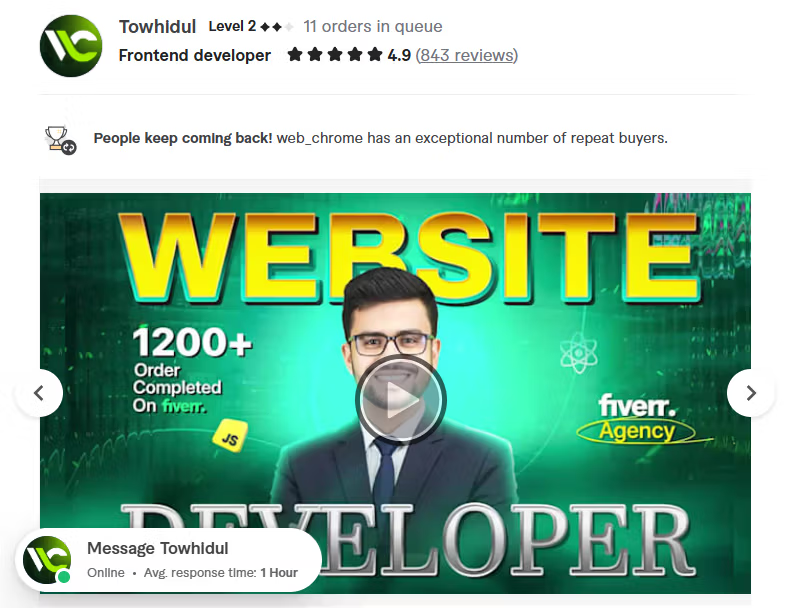
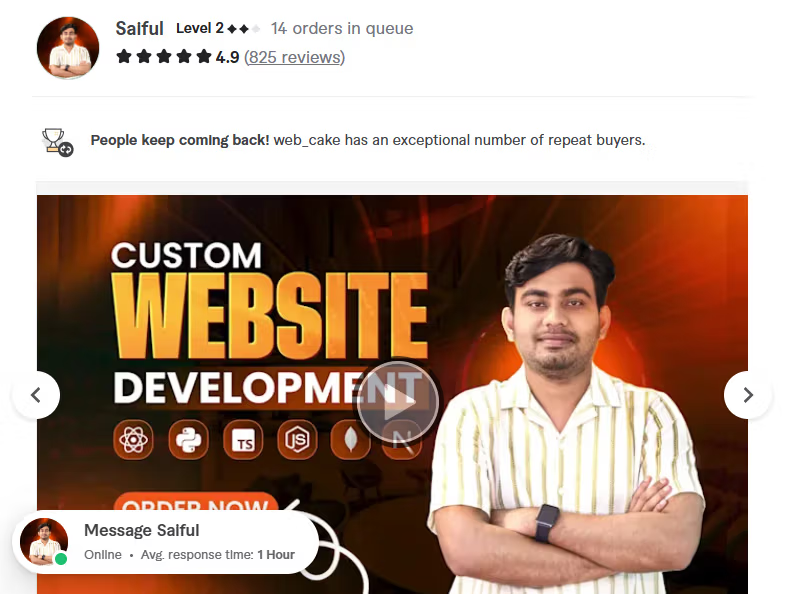
2. Fiverr – Best for Quick, Affordable Gigs and Productized Services

Fiverr revolutionized freelancing with its gig-based model, making it easy to find website developers offering packages for landing pages, full sites, Shopify stores, or fixes.
Key features: Fiverr Pro for vetted higher-end talent, clear pricing tiers, and fast delivery. Many developers specialize in no-code/low-code tools like Webflow or Bubble alongside traditional coding.
Pros:
- Budget-friendly starting prices.
- Reviews and seller levels provide transparency.
- Quick turnaround for straightforward projects.
- Evolved beyond $5 gigs to professional services.
Cons:
- Quality varies widely on basic tiers.
- Less ideal for highly complex, ongoing projects.
- 20%+ fees on some transactions.
Best for: Small businesses, startups, or one-off tasks like WordPress customization or basic e-commerce setups.
Pro tip: Look for sellers with high order completion rates and detailed portfolios. Use Fiverr Pro for better quality assurance.
3. Toptal – Premium Vetted Talent for High-Stakes Projects

If quality is your top priority, Toptal screens for the top 3% of developers. Their web developers often have experience with Fortune 500 companies and complex architectures.
Why it excels: Rigorous vetting (technical tests, interviews), dedicated matching, and a focus on long-term fits. Rates are higher but reflect expertise.
Pros:
- Exceptional talent quality and reliability.
- No-risk trial period.
- Strong project management support.
- Clients report high satisfaction (4.9/5 average).
Cons:
- Premium pricing ($60–$180+/hr).
- More selective and potentially slower initial matching.
- Overkill for simple static sites.
Best for: Enterprises, scale-ups, or technically demanding projects like scalable SaaS platforms or custom enterprise web solutions.
4. Freelancer.com – Competitive Bidding for Cost-Conscious Hirers

Similar to Upwork but with a strong emphasis on contests and bidding, Freelancer.com offers global access to web developers.
Pros:
- Large user base.
- Milestone payments and contests for design-heavy projects.
- Affordable options.
Cons:
- Can attract lower-quality bids.
- Additional fees for premium features.
- More hands-on management is needed.
Best for: Budget projects or when you want multiple developers competing.
5. PeoplePerHour – Strong for European Talent and Packaged Services

PeoplePerHour shines with its “Hourlies” (pre-packaged services) and a solid base in Europe, making it great for compliance and time-zone alignment.
Pros:
- Professional freelancers with clear offerings.
- Good for UK/EU clients.
- Escrow protection.
Cons:
- Smaller pool than global giants.
- Varies by region.
Best for: Mid-sized projects with a European focus.
6. Guru – User-Friendly with Strong Safety Features

Guru offers a cleaner interface than some competitors, with SafePay protection and detailed search filters.
Pros:
- Lower fees in some cases.
- Workrooms for collaboration.
- Good for tech and creative projects.
Cons:
- Smaller developer pool.
- Less brand recognition.
Best for: Businesses wanting a balance of quality and ease.
7. Contra – Commission-Free Platform for Independent Professionals

Contra stands out with its 0% commission model on earnings, beautiful portfolios, and focus on higher-quality, independent talent.
Pros:
- Freelancers keep 100% (or clients pay small fees in some setups).
- Modern, portfolio-focused design.
- Appeals to premium developers avoiding high-fee platforms.
Cons:
- Smaller job volume.
- Still growing.
Best for: Quality-focused hirers who want to maximize value and build direct relationships.
8. Malt – Europe’s Go-To for Local and High-Quality Freelancers

Malt (strong in France, UK, and broader Europe) connects businesses with verified freelancers, emphasizing proximity and collaboration.
Pros:
- Strong vetting and community feel.
- Excellent for EU compliance (GDPR, contracts).
- Competitive daily rates with transparent profiles.
Cons:
- Best for European projects; global reach is more limited.
- Higher rates in some Western European markets.
Best for: Companies in Europe seeking reliable, local-ish talent for website development.
9. LinkedIn – Professional Networking Meets Hiring

Don’t overlook LinkedIn’s Services Marketplace, job postings, and direct outreach to freelance web developers.
Pros:
- Access to professionals with verifiable experience.
- Networking builds trust.
- No or low platform fees for direct hires.
Cons:
- More effort in searching and vetting.
- Less structured project tools.
Best for: Building long-term relationships or hiring specialists via recommendations.
10. Specialized Vetted Platforms (e.g., Gun.io, Arc.dev, or Lemon.io)

For elite or fast matching, platforms like Gun.io, Arc, or Lemon.io focus on pre-vetted developers with quick turnaround.
Pros:
- High vetting standards.
- Faster matching for specific tech stacks.
- Tailored for startups and tech projects.
Cons:
- Higher costs or selective access.
Best for: Time-sensitive, high-quality needs.
Essential Tips for Hiring Freelance Website Developers Successfully
- Define Your Project Clearly: Provide detailed briefs, tech stack, timelines, and KPIs.
- Vet Thoroughly: Review portfolios, ask for similar project examples, conduct interviews, and request code audits if needed.
- Start Small: Use a paid test task or milestone.
- Legal and Payment Protections: Use platform escrow or clear contracts covering IP rights, revisions, and confidentiality.
- Communication: Set expectations for updates (e.g., weekly demos).
- Post-Project: Plan for maintenance, handovers, and documentation.
- Budget Wisely: Factor in platform fees, revisions, and potential scope changes. Expect $25–$150+/hr depending on expertise and location.
- Diversity and Time Zones: Consider nearshoring for better overlap (e.g., Latin America for US clients).
Avoid red flags like unrealistically low bids, poor communication, or a lack of portfolio.
Common Challenges and How to Overcome Them
- Quality Variance: Stick to higher-tier or vetted platforms.
- Time Zone Issues: Prioritize overlapping hours.
- Scope Creep: Use fixed milestones.
- IP Ownership: Specify in contracts.
With the right approach, these issues are manageable.
Also Check: Hire The Best Freelance Golang Developers on Fiverr
Conclusion
The “best” place depends on your budget, project complexity, timeline, and location. For most businesses, starting with Upwork or Fiverr for testing and scaling to Toptal or Contra for premium work offers a smart path. Combine platforms—use LinkedIn for networking alongside marketplaces.
Investing time in selection pays off with a website that drives results for years. Ready to hire? Research 2-3 platforms, post a clear project today, and compare responses.
FAQs
Q: How much does it cost to hire a freelance website developer?
A: Ranges from $20/hr for basic work to $150+/hr for experts. Fixed projects vary from $500 for simple sites to $10,000+ for custom apps.
Q: What skills should I look for?
A: Modern frontend (React/Vue), backend (Node/PHP/Python), CMS (WordPress/Shopify), performance, SEO, and security basics.
Q: How long does hiring take?
A: 1-7 days typically, faster on gig platforms.
Q: Can I hire for ongoing maintenance?
A: Yes—many platforms support retainers.
By following this guide, you’re well-equipped to find exceptional freelance website developers who elevate your digital presence. Share your experiences in the comments, and subscribe for more hiring and web development insights!

Muhammad Hasan is an experienced SEO expert and blog writer passionate about helping businesses connect with top freelance talent. With 4 years of hands-on experience in content strategy and search engine optimization, he specializes in writing SEO-friendly blog posts that rank, engage, and convert.