
In today’s digital-first world, your website is often the first impression customers have of your business. Whether you’re a startup launching an MVP, a small business needing an online storefront, or an established company seeking a major redesign, the decision of who builds it matters enormously. Two popular routes dominate the conversation: hiring a web developer on Fiverr or partnering with a professional web development agency.
This comprehensive guide breaks down the real differences based on cost, quality, speed, communication, scalability, and long-term results. By the end, you’ll have a clear framework to choose what fits your project, budget, and business goals. No hype—just practical, experience-backed insights to help you avoid costly mistakes.
Table of Contents
Understanding Fiverr Web Developers
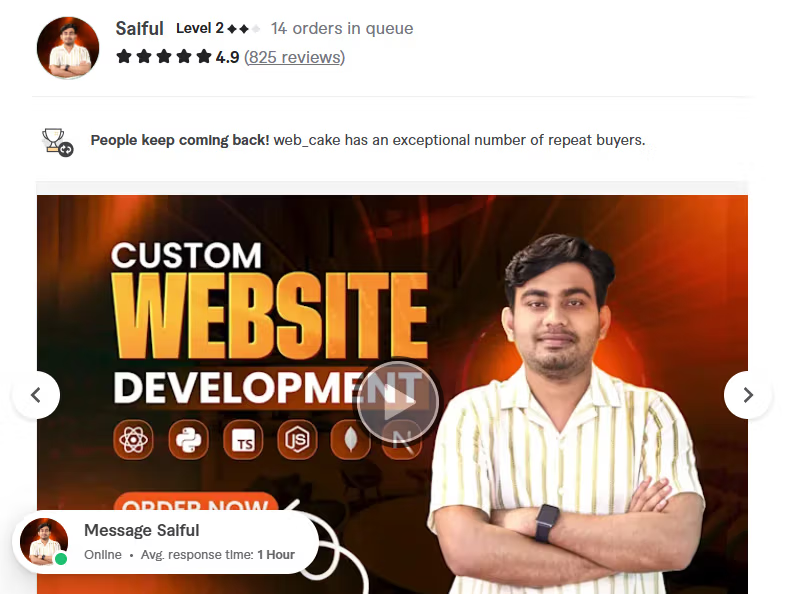
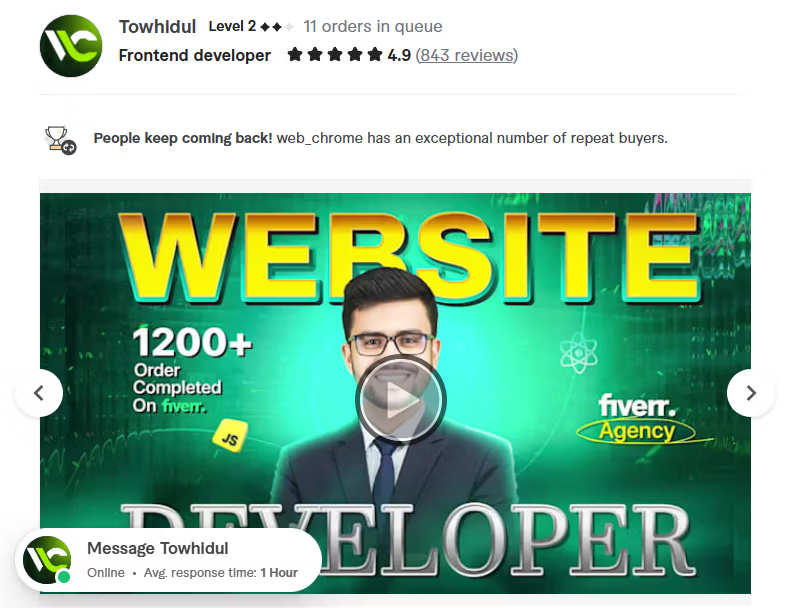
Fiverr is a global marketplace where independent freelancers offer “gigs”—packaged services starting from as little as $5, though serious web development gigs typically range from $100 to several thousand dollars. Web developers on the platform include everything from WordPress specialists and Shopify experts to full-stack coders handling custom applications.
Key Characteristics:
- Gig-based model: You browse seller profiles, reviews, portfolios, and order levels (New Seller, Level 1, Top Rated, etc.).
- Diverse talent pool: Developers from around the world, often in lower-cost regions, allowing competitive pricing.
- Flexibility: Many offer basic, standard, and premium packages with clear deliverables, revisions, and add-ons.
- Speed: Simple projects like landing pages or basic sites can be delivered in days.
Top-rated Fiverr developers can deliver solid work for straightforward needs, especially if you provide detailed briefs, wireframes, or reference sites. However, outcomes vary widely depending on the seller you choose.
What Is a Web Development Agency?
A web development agency is a professional team—often including designers, front-end and back-end developers, project managers, QA testers, and sometimes SEO or marketing specialists. Agencies handle end-to-end projects with structured processes, contracts, and ongoing support.
Typical Agency Setup:
- Dedicated project manager as your single point of contact.
- Collaborative workflows using tools like Slack, Jira, or Asana.
- In-house or vetted specialists for design, development, testing, and launch.
- Post-launch maintenance, hosting recommendations, and scalability planning.
Agencies serve businesses needing complex functionality, custom features, high traffic handling, or integration with CRMs, payment gateways, and third-party tools.
Head-to-Head Comparison: Fiverr vs Agency
1. Cost Breakdown (2026 Realities)
Fiverr Web Developers:
- Basic landing page or simple site: $100–$1,500.
- Custom WordPress/Shopify site: $500–$5,000+ (depending on features).
- Hourly rates: Often $5–$165, with averages around $20–$100 for experienced sellers.
- Pros: Low upfront cost, pay-per-milestone or package.
- Cons: Hidden costs from revisions, scope creep, or fixes later. Multiple freelancers for different parts can add up.
Web Development Agencies:
- Small business brochure site: $8,000–$25,000.
- Mid-complexity e-commerce or custom site: $40,000–$100,000+.
- Enterprise-level: $100,000–$200,000 or more.
- Hourly rates: $100–$300+ for senior teams in the US/EU.
- Pros: Often includes strategy, testing, training, and initial support in the quote.
- Cons: Higher investment; requires clearer budgeting upfront.
Verdict on Cost: Fiverr wins for budget-conscious projects under $5k. Agencies provide better value for projects where quality, reliability, and future-proofing justify the spend. The cheapest option frequently becomes the most expensive when you factor in rework.
Check: Cost To Build A Website? [Freelance Developer Rates]
2. Quality and Expertise
Fiverr offers a spectrum. Top-rated sellers with strong portfolios produce excellent results for templated or moderately custom work. However, many gigs rely on pre-built themes, plugins, or quick implementations that may lack optimization for speed, security, accessibility, or SEO.
Agencies typically deliver higher consistency through code reviews, standardized processes, user testing, and adherence to best practices (e.g., mobile-first, WCAG compliance, performance scores above 90 on Google PageSpeed). They think strategically about your business goals, user journeys, and long-term maintenance.
Real-World Insight: A Fiverr site might look great initially, but develop issues with updates, plugin conflicts, or scaling. Agency work is built with documentation, clean code, and future scalability in mind.
3. Project Timeline and Delivery
- Fiverr: Faster for small scopes—1–4 weeks common. Delays happen if the freelancer juggles multiple clients or communication lags across time zones.
- Agency: 2–6 months for typical projects, with clear milestones, approvals, and testing phases. More predictable due to team redundancy and project management.
Choose Fiverr for speed on simple needs; agencies for complex projects requiring coordination.
4. Communication and Project Management
Fiverr relies on the platform’s messaging plus external tools (email, Zoom). Time zone differences and language barriers can slow things down. One person handles everything, so availability matters.
Agencies excel here with dedicated managers, regular updates, shared dashboards, and structured feedback loops. You get a team aligned on your vision.
5. Scalability, Maintenance, and Long-Term Support
This is where differences shine brightest:
- Fiverr: Great for one-off projects. Ongoing maintenance requires rehiring (possibly different people), leading to knowledge gaps.
- Agency: Built-in retainers for updates, security, performance monitoring, and feature additions. They understand your site deeply and can scale it as your business grows (e.g., adding user accounts, analytics, or integrations).
Many businesses start with Fiverr for an MVP and later migrate to an agency for professional scaling, incurring extra costs.
6. Risk and Accountability
Fiverr has buyer protection and reviews, but disputes can be tricky for complex issues. No formal SLAs in basic gigs.
Agencies use contracts, NDAs, IP ownership agreements, warranties, and service-level commitments. Higher accountability and professional insurance often apply.
Pros and Cons Summary
Fiverr Web Developers – Pros:
- Affordable entry point.
- Huge variety of talent and specialties.
- Quick turnaround for defined tasks.
- Easy to test small projects.
- No long-term commitment.
Cons:
- Quality lottery (even with reviews).
- Limited strategic input.
- Potential communication hurdles.
- Weaker long-term support.
- Risk of technical debt.
Web Development Agencies – Pros:
- Consistent high-quality output.
- Full-service team and expertise.
- Strong project management.
- Better security, performance, and scalability.
- Ongoing partnership and support.
Cons:
- Higher cost.
- Longer timelines.
- More formal processes (can feel slower initially).
When to Choose Fiverr Web Developers
- You have a tight budget (< $5,000–$10,000).
- Project is straightforward (e.g., blog, basic landing page, simple e-commerce with existing theme).
- You need something fast and have clear specifications.
- You’re comfortable managing the project and providing detailed feedback.
- Testing ideas or building an MVP before investing more.
Tips for Success on Fiverr:
- Filter for Top Rated or Level 2+ sellers with 100+ reviews.
- Review portfolios for similar projects.
- Use detailed briefs, mood boards, and reference sites.
- Start with a small test gig.
- Clarify revisions, ownership, and post-delivery support upfront.
When to Choose a Web Development Agency
- Complex requirements (custom functionality, user dashboards, heavy integrations).
- Business-critical site where downtime or poor performance costs money.
- Need for branding alignment, SEO strategy, accessibility, and compliance.
- Desire for long-term partnership and maintenance.
- Larger budget with focus on ROI over years.
Tips for Working with Agencies:
- Request multiple proposals and compare methodologies.
- Check case studies and client references.
- Define success metrics early.
- Budget for ongoing maintenance (typically 10–20% of build cost annually).
Hybrid Approaches and Future Trends
Many smart businesses use a hybrid model: Fiverr for quick prototypes, graphics, or specific tasks, and an agency for core architecture and integration. In 2026, AI tools are helping both sides—freelancers use them for faster coding, and agencies for efficiency and innovation.
No-code/low-code platforms also blur lines, but custom development still wins for unique needs.
Real-World Considerations and Case Studies
Businesses report success with Fiverr for simple sites or when they have strong in-house oversight. Others share stories of rebuilding Fiverr sites after 6–12 months due to performance or security issues, ultimately spending more than an agency quote would have cost initially.
Agencies often deliver measurable results like higher conversion rates, better SEO rankings, and smoother growth. One common pattern: startups use freelancers early, then transition to agencies as revenue justifies the investment.
How to Make the Right Decision for Your Project
- Define Scope Clearly: List must-have features, nice-to-haves, and future needs.
- Assess Budget and Timeline: Be realistic about total cost of ownership.
- Evaluate Risk Tolerance: Can you afford potential rework?
- Consider Business Stage: Early-stage vs. scaling enterprise.
- Get Multiple Quotes: Compare apples-to-apples where possible.
- Trust Your Gut on Communication: Test responsiveness early.
Conclusion
Fiverr web developers and agencies both have valid places in the ecosystem. Fiverr democratizes access to talent and enables rapid, affordable starts—ideal for many small projects. Agencies deliver professionalism, reliability, and strategic depth that pay dividends over time for more ambitious or critical initiatives.
The “best” choice depends entirely on your specific situation. Many successful businesses use both at different stages. Invest time in vetting—whether reviewing Fiverr profiles thoroughly or interviewing agencies—and prioritize clear communication and defined expectations.
Your website is a long-term asset. Choose the partner that aligns with where your business is headed, not just the lowest price today. With the right decision, you’ll build something that doesn’t just look good but drives real results for years to come.
Also Check: Hire The Best Freelance Golang Developers on Fiverr
FAQs
Is Fiverr good for professional websites?
It can be for simpler sites if you select experienced sellers carefully. For professional, scalable results, agencies generally provide stronger foundations.
How much does a good website cost on Fiverr vs agency?
Fiverr: $500–$8,000+ for most projects. Agency: $15,000–$100,000+, depending on complexity.
Can I hire a Fiverr developer for ongoing maintenance?
Yes, but consistency varies. Agencies often include reliable retainers.
What if my project grows beyond the initial scope?
Fiverr may require new gigs or freelancers; agencies handle change orders more seamlessly within a partnership.
How do I protect my idea/IP?
Use contracts in both cases. Agencies typically have stronger standard agreements.
Ready to move forward? Define your needs, research options matching your scale, and take the first step toward a website that truly serves your business.

Muhammad Hasan is an experienced SEO expert and blog writer passionate about helping businesses connect with top freelance talent. With 4 years of hands-on experience in content strategy and search engine optimization, he specializes in writing SEO-friendly blog posts that rank, engage, and convert.